
AI & Machine Learning Platform
Your factory data, turned into decisions
The MSF AI platform learns from your production data to optimize schedules, predict quality issues, forecast demand and reveal hidden capacity. It is the intelligence layer across all MSF modules.
Request a DemoStart a PoCWhat is a manufacturing AI platform?
A manufacturing AI platform applies machine learning to production data to optimize schedules, predict quality problems, forecast demand and detect abnormal machine behavior. Meta Smart Factory's AI platform is the intelligence layer across all MSF modules: pre-built manufacturing models are tuned by MSF experts on the plant's own data, so no in-house data science team is needed, and every model runs in shadow mode before an alert goes live.
Key Features
At a Glance
Technical Specifications
- Data foundation
- MES execution data is the prerequisite; each additional module (APS, Quality, Maintenance) unlocks further AI use cases.
- Model inputs
- Supervised models (XGBoost feature importance, Random Forest output prediction) need process parameters plus a coded outcome label; the LSTM autoencoder needs only raw sensor series.
- Deployment
- On-premise or private cloud, your choice; production data stays isolated to your own models.
- Output path
- Recommendations only: a panel, a report or a proposed schedule in APS. Writing setpoints back to a controller is a separately scoped integration, never a safety interlock.
- Labelled data needed
- Supervised models are sized in correctly coded examples per class: scrap models need real scrap reason codes, demand models several full seasonal cycles.
- Energy prerequisites
- Metering granular enough to identify individual consumers, your tariff calendar, and a scheduler to receive the plan; it optimizes against kWh price windows only.
- Customer-side effort
- A named process or quality engineer with a standing review slot; MSF tunes and retrains, the customer keeps scrap and stop codes clean and flags process changes.
From the Platform: Real Screens
Frequently Asked Questions
Do I need a data science team?
No. Models come pre-built for manufacturing use cases and are tuned by MSF experts on your data.
Where does the data live?
On-premise or in a private cloud, your choice. Your production data never trains other companies' models.
Which modules does AI require?
MES data is the foundation; each additional module (APS, Quality, Maintenance) unlocks more AI use cases.
How much production history does the AI need?
What counts is the number of labelled examples per class; elapsed months do not matter. A scrap model learns from defects, so a low-defect line can run a long time without producing enough of the minority class to train on, while a demand model wants several complete seasonal cycles. Older history only counts if it sits on the same item master and plant structure you forecast today, so find your last ERP migration or part renumbering first. A short clean series beats a long one stitched across a renumbering.
Does predictive quality work without scrap reason codes?
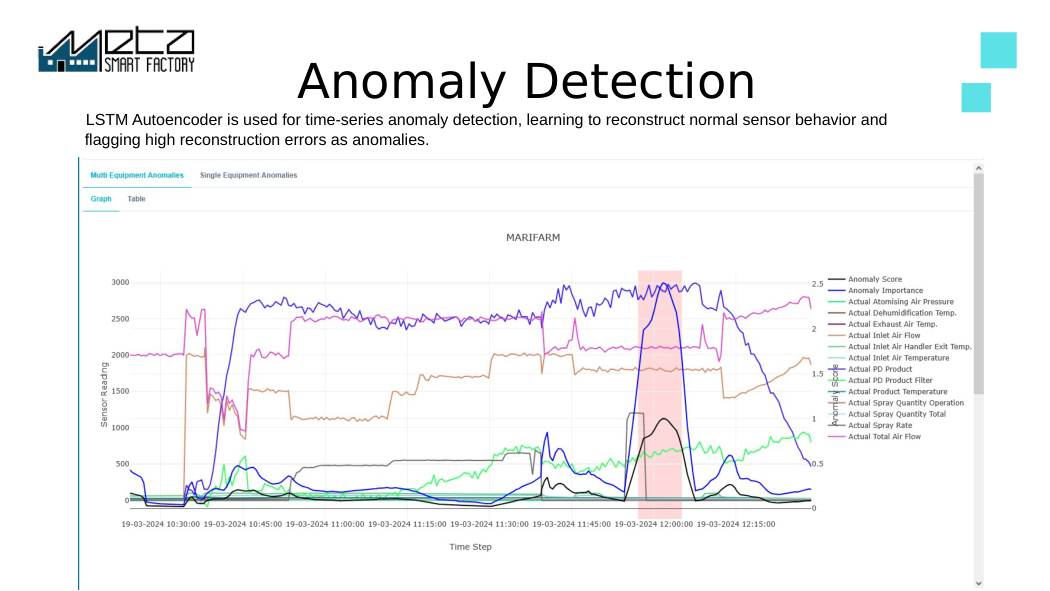
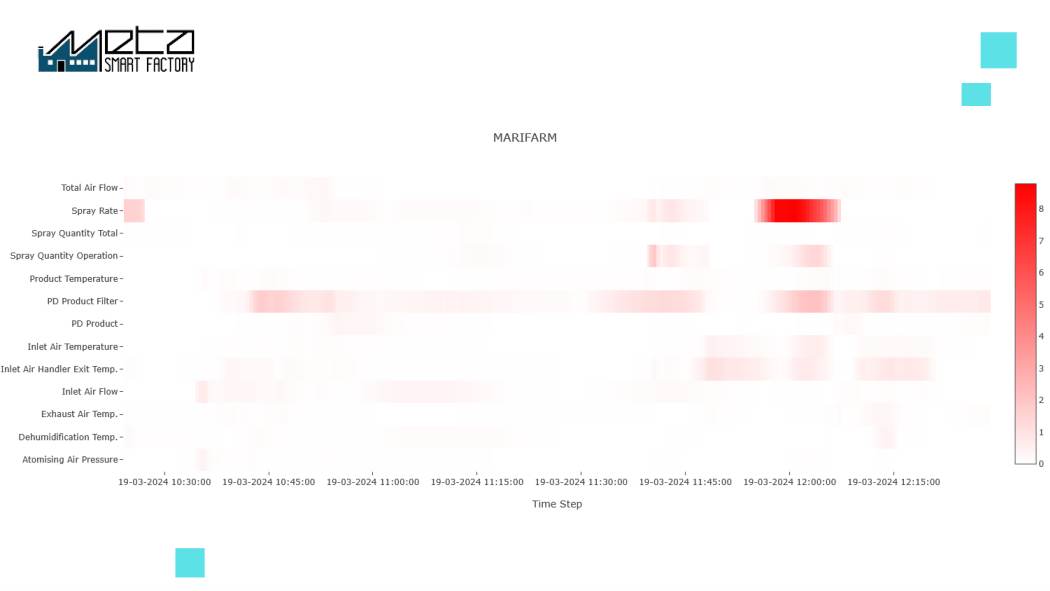
Not the supervised part. Predictive quality needs process parameters on one side and a real outcome label on the other, and a catch-all scrap reason on most records teaches it nothing. Fix the coding in MES first, and measure progress in correctly coded defects per scrap reason. Weeks elapsed tell you nothing. Meanwhile the LSTM anomaly detection is unsupervised and needs no labels, so you can start there, with the caveat that it flags unusual behaviour without naming a defect.
Does the AI change machine parameters on its own?
No. The parameter and optimization models produce recommendations that land in front of a person, on a panel, in a report, or as a proposed schedule in APS, and writing anything back to a controller is a separate integration you scope deliberately. If you do want closed-loop setpoints later, treat it as a control project with its own change management, and never as a substitute for hardwired safety interlocks.
How much of our time does maintaining the AI models take after go-live?
Budget a named process or quality engineer with a standing review slot; MSF does the tuning and retraining, but the result needs an owner on your side. The recurring work is checking that predictions still track reality, flagging when a new product, a tooling change or a refurbished machine has moved the process, and keeping scrap and stop codes clean. It is less than a full-time job, but it still takes real time.
What happens to the models when we change the process or launch a new product?
Accuracy drops, and it drops quietly. A model learned your plant as it was, so a new material, a rebuilt machine or a changed cycle makes part of its history irrelevant while the output still looks confident. Tell us about planned process changes in advance, and pin down in the project which models get a predicted-versus-actual comparison, who reads it and how often. Do not assume drift monitoring is switched on for every model by default.
What does AI energy optimization require?
Metering granular enough to identify individual consumers, your actual tariff calendar, and a scheduler the optimizer can hand a plan to; one meter at the plant entrance tells you the total and nothing about which operation to move. What the optimizer plans against is energy price windows, measured in kWh. Holding a contracted peak-demand ceiling is a different job that needs interval-level measurement and the ability to hold or shed a load in the moment, so scope that separately.
How accurate are the AI predictions?
There is no single accuracy number. The model emits a score, and where you set the alert threshold fixes both the catch rate and the false-alarm rate, measured on parts the model never saw; choosing that point is a business decision about what a stopped good part costs against a shipped bad one. Feature importance and correlation are model-level diagnostics, good for catching a shortcut but useless for judging one flag. Run in shadow until enough real defects accumulate to compare.
More Articles
Related Products
Ready to See Your Factory's Potential?
Get a free demo and a Proof of Concept plan tailored to your production.